

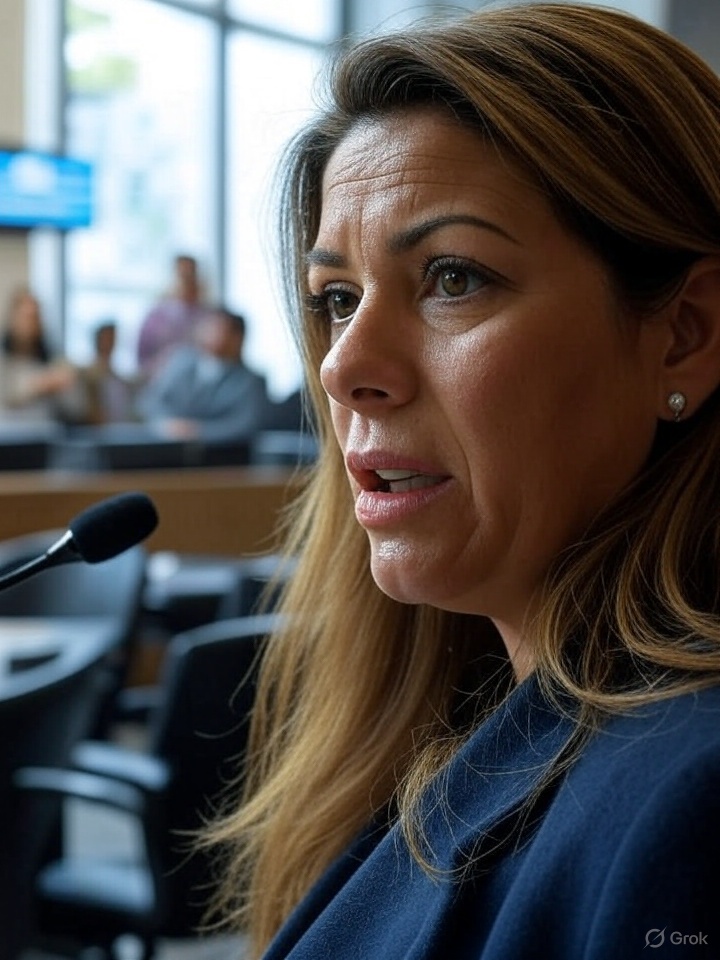
The Guadalajara City Council has taken a significant step toward greater transparency and accountability by unanimously approving an initiative led by Councilwoman Ana Robles. The proposal, titled “Guadalajara, a step forward and firm in transparency and accountability,” aims to strengthen the city’s commitment to open governance and combat corruption through innovative measures.
This initiative comes in response to the controversial dissolution of the Jalisco Institute of Transparency, Public Information, and Personal Data Protection (ITEI), a move that has sparked widespread debate about the future of transparency in the state. The new municipal model seeks to fill this gap by prioritizing digitalization, citizen collaboration, and preventive anti-corruption strategies.
Councilwoman Ana Robles, a prominent Morena figure, emphasized that the initiative is designed to ensure public access to information and streamline municipal processes. By integrating artificial intelligence and digital tools, the city aims to make government operations more transparent and efficient, setting a potential benchmark for other municipalities in Mexico.
The proposal builds on Guadalajara’s history of pioneering transparency efforts, such as being the first city in Mexico to establish a Municipal Council of Transparency and Public Ethics in 2004. Robles highlighted this legacy, arguing that the city is well-positioned to lead in creating a robust, modern framework for accountability.
One key aspect of the initiative is its collaborative approach, involving citizens, universities, and anti-corruption organizations in oversight processes. This inclusion aims to rebuild public trust, which has been strained by recent state-level decisions, particularly the elimination of the ITEI.
The use of artificial intelligence stands out as a forward-thinking component, intended to simplify bureaucratic processes and make public information more accessible. By digitizing services, the city hopes to reduce opportunities for corruption and improve the speed and quality of responses to citizen requests.
Mayor Verónica Delgadillo supported the initiative, stating that it aligns with the city’s goal of maintaining an open government that prioritizes accountability. She underscored the importance of adapting to new national and international transparency standards, especially in light of technological advancements.
However, critics argue that the initiative’s success will depend on its implementation and the independence of the oversight mechanisms. With Morena’s influence in local governance, some question whether the proposed citizen-led oversight will truly hold the administration accountable or simply serve as a political tool.
The state government, led by Governor Pablo Lemus, has also announced plans for a new citizen oversight body to monitor public spending, which could complement Guadalajara’s efforts. Yet, with the ITEI’s dissolution still fresh, skepticism remains about whether these reforms will deliver meaningful change or merely shift responsibilities to less autonomous entities.
As Guadalajara moves forward with this model, it positions itself as a potential leader in municipal transparency, but the challenge lies in ensuring that these promises translate into tangible results for citizens seeking a more open and accountable government.